Welcome to our little club
If your child loves making things, taking things apart, asking questions, or finding different ways to use something, they’ll enjoy it here.
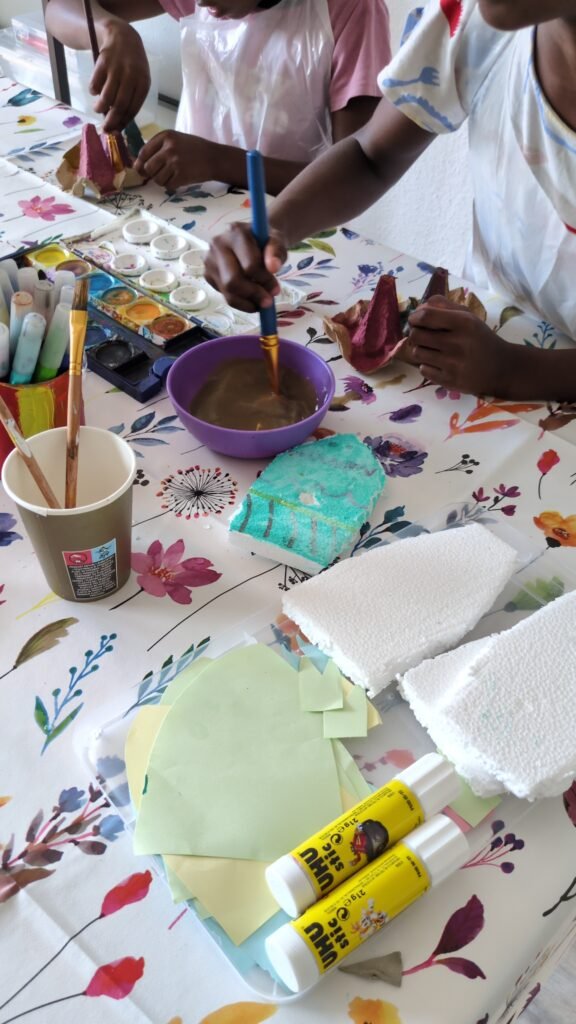
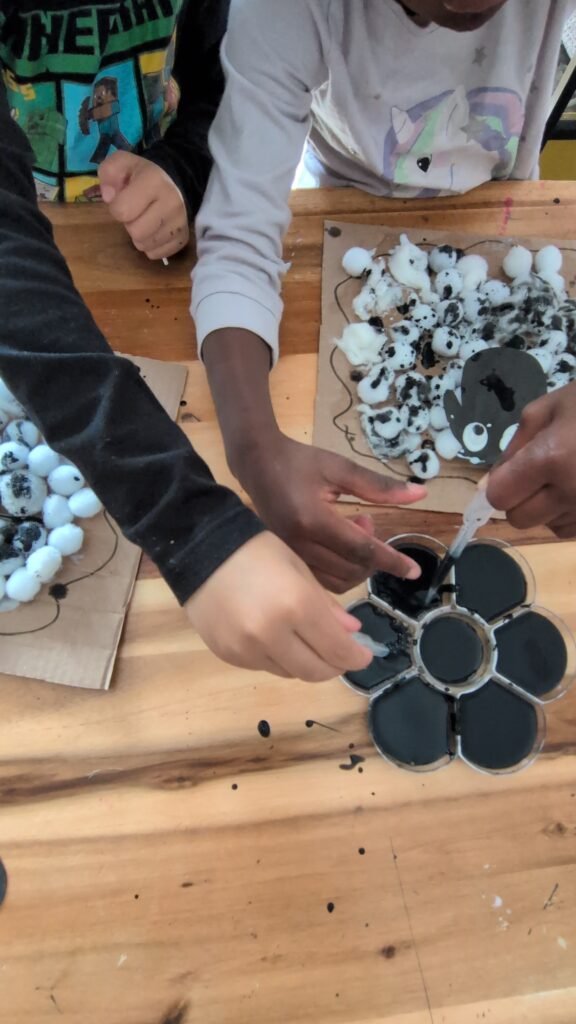
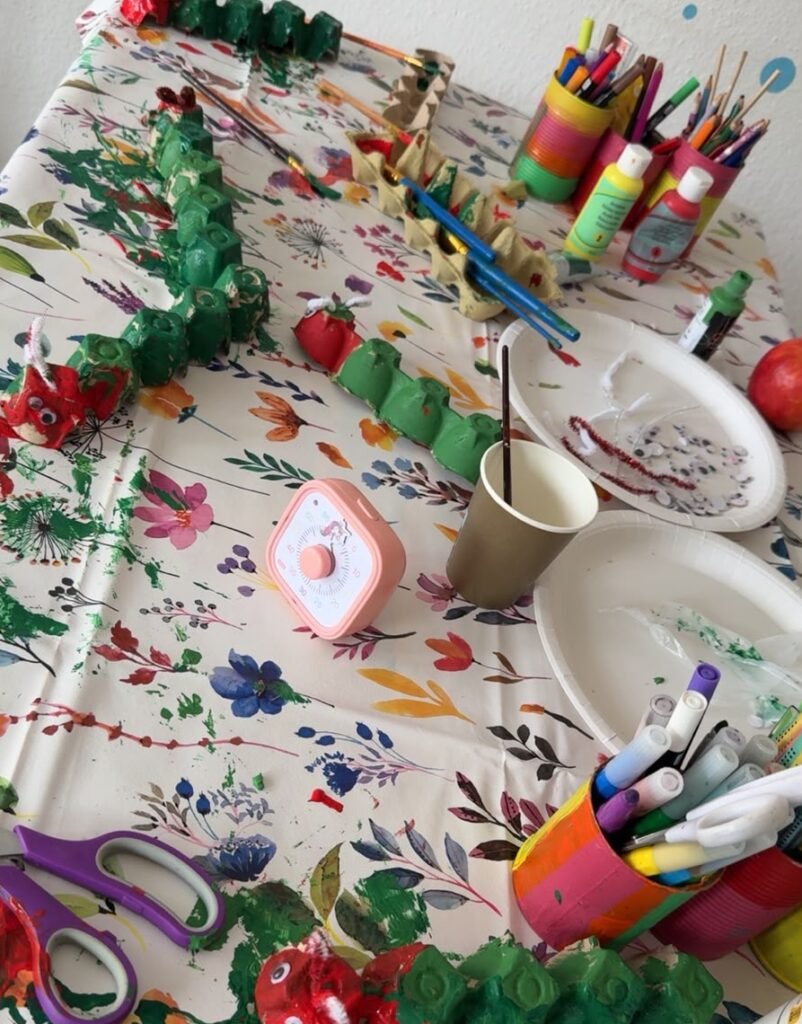
At Little English Crafters, we meet in small groups to make things with our hands, try out ideas, and play with what we’ve created. And we do it all in English!
Now, it’s not because every craft needs to teach five new English words, but because English is simply the language I use when we’re together. Well, we make things, we read stories, we do lots of movements, we play vocabulary games and sometimes end up doing something completely different from what I had planned!
I bring the materials and prepare the activities, but I also leave room for the children to try their own ideas. One thing you’ll notice is that I’m speaking English the whole time. From welcoming the children and helping them settle in to crafting, to playing and tidying up together. Also, your child doesn’t need to know any English before joining us; that’s part of why we’re here.
We don’t just make things to take home
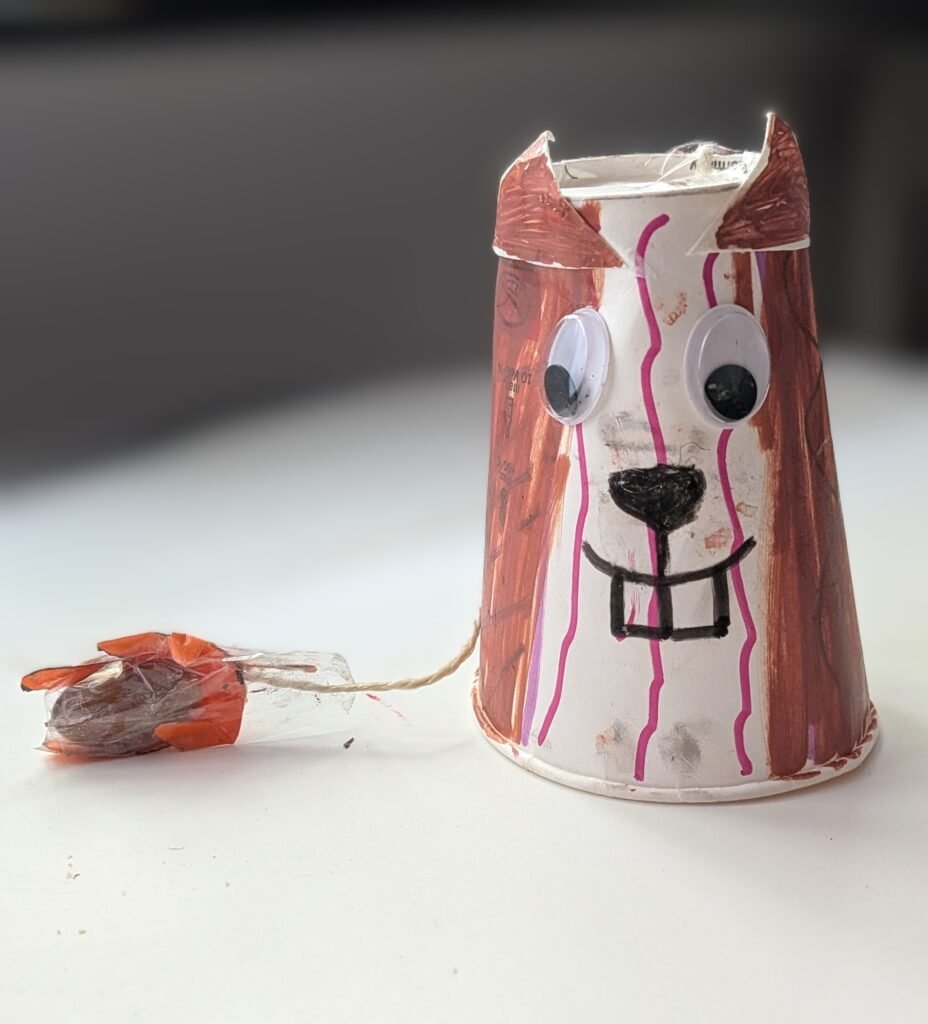
One of my favourite things about crafting with children is seeing what happens after they’ve finished making something. We once made a squirrel cup-and-ball game; the children had to put their own games together, work out how to catch the ball and keep trying until they got it.
And they loved it!
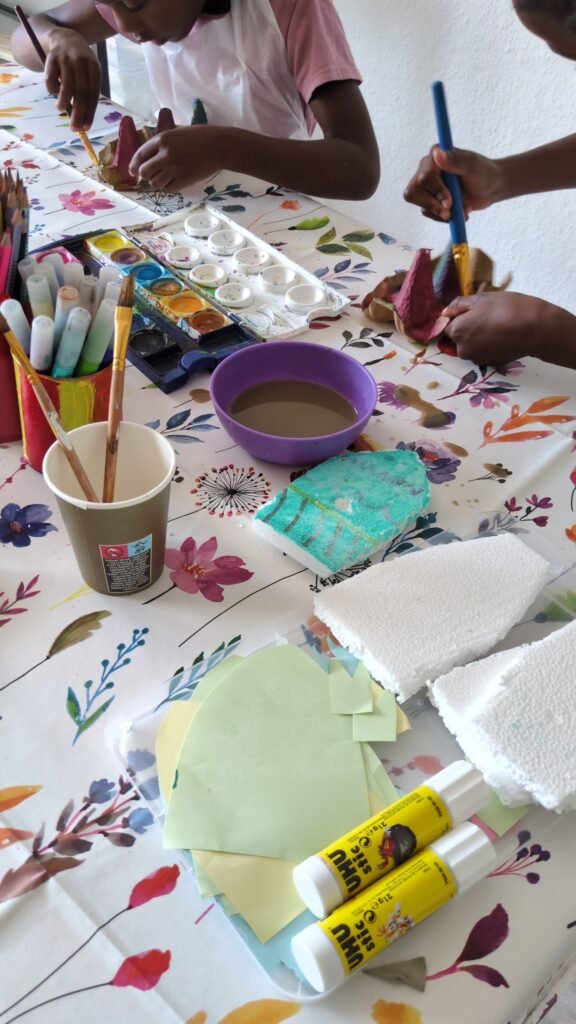
That’s the sort of crafting I enjoy doing with children. I don’t want to just give them something that’s practically finished and ask them to stick a few decorations on it.
I want them to get involved in making it, and decide where something should go, work out how to attach it, ask for help, try again when something doesn’t work and finally get to play with something they’ve made themselves.
Of course, I prepare the activities and help with the tricky parts, but the children should be doing the making, not watching me do it for them – and when we’re finished, the fun doesn’t have to stop at the craft table.
So where does the English come in?
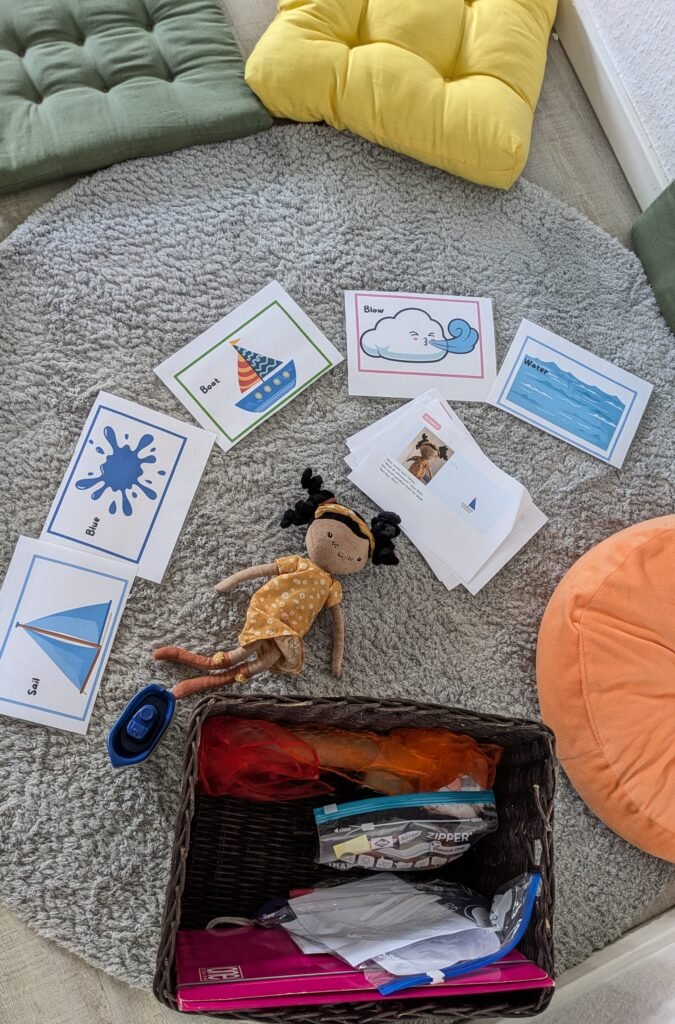
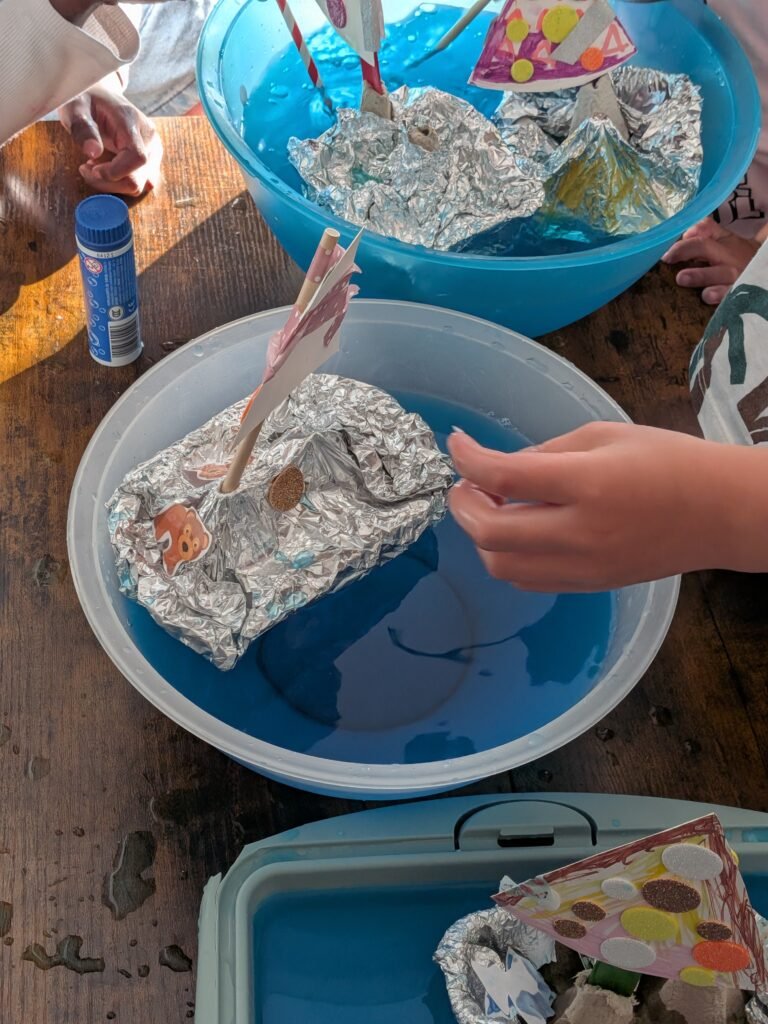
Everywhere, really. Imagine we’re making a little boat, and we need to choose our materials, put the pieces together and work out how to make it float.
I’m talking with the children as we go, and I’m asking:
“Can you hold this?” “Where should we put the sail?”
“Shall we try it in the water?” “Oh, it’s sinking! “Oh, it’s floating again” “Your mast is colourful”. That’s English happening while we’re doing something together, and
the children can see what I’m talking about. They can touch it, try it and watch what happens afterwards.
Also, there’s plenty of repetition, because that’s what happens naturally when you’re making something. We ask for the same materials, try things again and talk about what we’re doing. I also use gestures, demonstrate things and give children time to understand. They certainly don’t need to speak English the whole time, because I want them to enjoy what they’re doing and become familiar with the language along the way.
What else happens at our club?
Crafting is at the centre of what we do, but we don’t always begin and end at the craft table. Sometimes a picture book gives us an idea for something to make. And sometimes the children turn their creations into a completely different game once they’re finished. What we do depends on the workshop, the ages of the children and what we’re exploring that day.
What matters is that there is enough structure for the children to feel comfortable and enough room for them to experiment.
A small group, with time for each child
Little English Crafters is a small club, and I intentionally keep each session to a maximum of six children. For me, every child needs the time and attention they need.
When you’re crafting with children, someone always needs a hand to hold something in place, find the right piece, or figure out why something isn’t working. And then there’s the child who wants to tell you absolutely everything about what they’re making. I love those conversations!
I want to have the time to sit beside a child, listen to their ideas and help them work something out, without feeling like we have to rush on to the next activity.
That’s one of the reasons I keep our groups small.
Thinking of joining us?
Our workshops take place in Maintal-Dörnigheim, with different themes and activities throughout the year.
Each workshop has its own recommended age group, date and registration details.
All the main craft materials are provided, and children don’t need any previous English knowledge.
So, if you’re wondering whether a particular workshop would suit your child, you’re welcome to ask me.
I’d love to hear from you.